

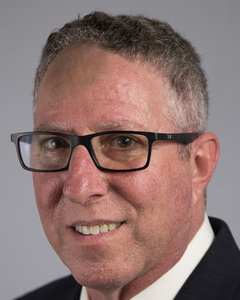
By Gary Levin, PharmD, BCPP, FCCP
Founding Dean and Professor Emeritus, College of Pharmacy
I was fortunate to be at an early stage in my career when the Psychiatric Pharmacy Specialty Certification (BCPP®) was first offered. At the time, I was an assistant professor at Albany College of Pharmacy, with clinical practice sites at Albany Medical Center Hospital and the Capital District Psychiatric Center.
I took the inaugural examination at the American Society of Health-System Pharmacists (ASHP) Midyear Clinical Meeting in 1996 and received my certification shortly thereafter. At the time of the first exam, most candidates had already been practicing in the specialty for many years. Many had completed psychiatric pharmacy residencies, and some had pursued additional fellowship training. Most also had at least five years of clinical experience, with some having practiced for more than 20 years.
I first took the examination to demonstrate to my colleagues in pharmacy, nursing, and medicine that my education and experience in psychiatric pharmacy extended well beyond the preparation provided in pharmacy school. At the time, several pharmacy programs offered the Doctor of Pharmacy (PharmD) degree, while many continued to award bachelor’s degrees in pharmacy until the early 1990s. The evolution to PharmD programs offered students additional opportunities to gain exposure to specialized areas of pharmacy practice, such as psychiatric pharmacy.
When I became board-certified, few health care professionals knew what pharmacist board certification was, let alone what BCPP was, since it was only the fourth BPS Board Certification offered at the time, following Nuclear Pharmacy (1978), Nutrition Support Pharmacy (1988), and Pharmacotherapy (1988).
While serving on the BPS Psychiatric Pharmacy Specialty Council from 1998 to 2004, alongside colleagues I met through BPS Specialty Council service, we authored an article to help other healthcare professionals better understand the role of psychiatric pharmacists. The article was published in the American Journal of Psychiatry.1 Around that time, psychiatric pharmacy began to gain greater recognition among psychiatrists, although awareness outside pharmacy developed more slowly and remains limited.
Even though my career took me to administrative roles, I chose to continue maintaining my BCPP credential for a number of reasons. Most importantly, to instill in the faculty I led that it is important to demonstrate your expertise in your area of practice. As a department chair and dean, I encouraged all clinical faculty to pursue BPS board certification as soon as they were able and prepared. I also encouraged them to continue maintaining certification throughout their careers. This also assured me, as their manager, that they were maintaining and enhancing their expertise.
Another reason for maintaining my certification is to demonstrate to colleagues in other professions that this higher level of credentialing existed, and to help spread the importance of board certification for pharmacists in various specialty areas.
I have long hoped that the growth of specialty certification of pharmacists would contribute to nationwide recognition of pharmacists as healthcare providers. Although that goal has not yet been fully realized, meaningful progress is evident in academic, clinical, and government settings. For me and many others, certification remains a valued mark of expertise, widely respected by fellow pharmacists, increasingly recognized by physicians, and gradually gaining visibility across the broader healthcare system.
Reference: Augustin SG, Puzantian T, Caley CF, Marken PA, Richards AL, Levin GM. Psychiatric Pharmacists. American Journal of Psychiatry. 2001;158:2090.